Overview
From IaaS and SaaS to edge computing and AI-driven infrastructure — everything you need to know about how cloud technology is reshaping the digital world in 2025 and beyond.
Quick Answer
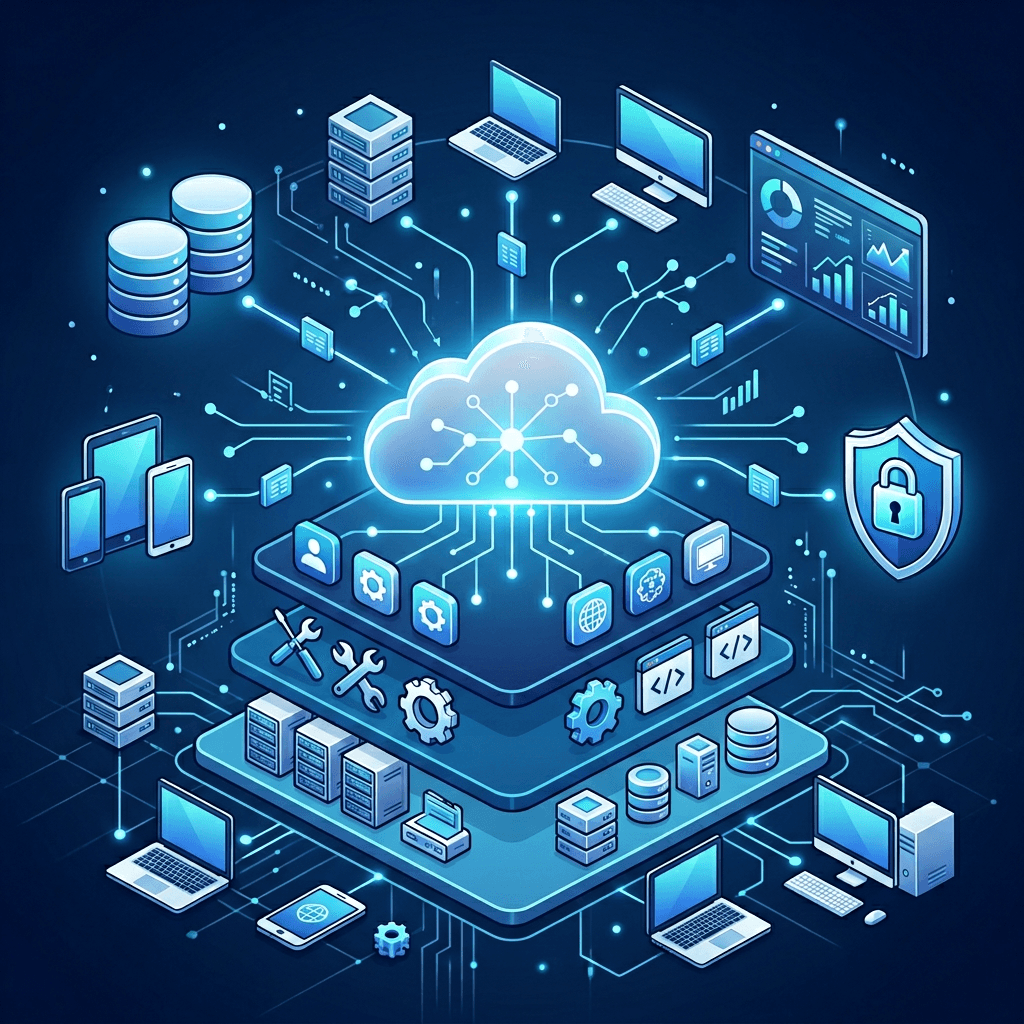
Cloud computing is the delivery of computing services such as servers, storage, databases, and software over the internet, enabling scalable, on-demand access without managing physical infrastructure.
Cloud computing has fundamentally transformed the way businesses store data, deploy applications, and scale their digital infrastructure. What began as a utility model for storing files has evolved into a multi-trillion-dollar cloud services ecosystem that powers everything from AI workloads to global e-commerce platforms. Whether you're a startup founder, an IT professional, or a tech enthusiast, understanding the cloud computing landscape is no longer optional — it's essential.
What Is Cloud Computing? A Clear Definition
At its core, cloud computing refers to delivering computing services — including servers, storage, databases, networking, software, analytics, and intelligence — over the internet ("the cloud") to offer faster innovation, flexible resources, and economies of scale. Instead of owning and maintaining physical data centers, businesses can access technology services on an on-demand basis from a cloud service provider like Amazon Web Services (AWS), Microsoft Azure, Google Cloud Platform (GCP), Mega Tech Bot Pvt. Ltd.
The cloud computing model operates on a pay-as-you-go pricing structure, meaning organizations only pay for the cloud resources they actually use. This drastically reduces capital expenditure and allows businesses of all sizes to access enterprise-grade technology.
The Three Core Cloud Service Models
The modern cloud services ecosystem is built around three foundational delivery models, each serving different business needs:
IaaS (Infrastructure as a Service) –
virtualized compute, storage, networking Examples: AWS EC2, Azure VMs.
PaaS (Platform as a Service) —
development tools & runtime environments. Examples: Google App Engine, Heroku.
SaaS (Software as a Service) —
ready-to-use apps delivered online. Examples: Salesforce, Microsoft 365, Slack.
A newer model, Function as a Service (FaaS) — also known as serverless computing — has gained enormous traction. It allows developers to run individual functions in response to events, without managing server infrastructure.
Public, Private, and Hybrid Cloud: Which Model Fits Your Business?
Understanding cloud deployment models is crucial for choosing the right architecture. The three primary options are:
Public Cloud
Managed by third-party providers and shared across multiple tenants, the public cloud offers the highest scalability and lowest upfront costs. It's ideal for startups, development environments, and applications with variable workloads. Major providers include AWS, Azure, and GCP.
Private Cloud
A private cloud environment is dedicated entirely to a single organization, either hosted on-premises or through a managed provider. It delivers greater control, security, and compliance — making it a preferred choice for industries like banking, healthcare, and government.
Hybrid Cloud
The hybrid cloud strategy combines public and private cloud resources, enabling data and applications to move seamlessly between environments. According to industry research, over 72% of enterprises have adopted a hybrid or multi-cloud architecture to balance agility with security.
"The future of enterprise IT is not choosing between public and private cloud — it's orchestrating both intelligently through a hybrid, multi-cloud framework."
The Evolving Cloud Ecosystem: Key Trends Shaping 2026 and Beyond
The cloud computing ecosystem is not static. It continues to evolve rapidly, driven by emerging technologies and changing business demands. Here are the most significant trends reshaping the landscape:
AI and Machine Learning in the Cloud:
Cloud providers are embedding AI-powered cloud services directly into their platforms. From managed ML pipelines (SageMaker, Vertex AI) to pre-built AI APIs for vision, speech, and NLP,cloud-based artificial intelligence is now accessible to any organization, regardless of size.
Edge Computing:
As IoT devices proliferate,edge cloud computing is reducing latency by processing data closer to its source rather than routing everything to centralized data centers. AWS Outposts, Azure Arc, and Google Distributed Cloud are leading solutions in this space.
Cloud-Native Development:
The shift towardcloud-native architecture— built around containers, Kubernetes, and microservices — allows teams to build highly resilient, auto-scaling applications.Kubernetes orchestration has become the de facto standard for managing containerized workloads at scale.
FinOps and Cloud Cost Optimization:
With cloud spending growing,cloud cost management has emerged as a strategic discipline. FinOps frameworks help businesses balance speed, cost, and quality by giving engineering and finance teams shared visibility into cloud expenditure.
Quantum Cloud Computing:
IBM, Google, and Microsoft are offering early-access computing cloud services, signaling a future where quantum acceleration becomes available on-demand, transforming cryptography, simulation, and optimization.
Sustainable Cloud Infrastructure:
As data centers account for roughly 1–2% of global electricity consumption, providers are racing toward cloud computing initiatives — carbon-neutral operations, renewable energy-powered data centers, and efficient hardware design.
Cloud Computing Security: Challenges and Best Practices
One of the most critical concerns in any cloud computing strategy is security. The shared responsibility model — where the cloud provider secures the underlying infrastructure and the customer secures their data and applications — requires businesses to be proactive about cloud security best practices.
Key practices include implementing Identity and Access Management (IAM), encrypting data at rest and in transit, enabling multi-factor authentication, conducting regular vulnerability assessments, and adopting a Zero Trust security architecture. Compliance frameworks like SOC 2, ISO 27001, GDPR, and HIPAA also play a pivotal role in regulated industries.
Benefits of Cloud Computing for Businesses
The business benefits of cloud computing extend far beyond simple cost reduction. Organizations that successfully adopt cloud technologies report:
Scalability on demand:
Instantly scale infrastructure up or down based on real-time traffic and usage.
Business continuity and disaster recovery:
Cloud-based backup and disaster recovery solutions ensure data resilience with minimal downtime.
Global reach:
Deploy applications in data centers across dozens of regions worldwide, bringing services closer to end users.
Faster time to market:
DevOps and cloud automation dramatically reduce the software development lifecycle.
Collaboration and remote work:
Cloud platforms enable distributed teams to collaborate in real-time, from anywhere in the world.
Conclusion: Navigating the Cloud-First Future
The cloud computing industry is no longer an emerging technology — it is the foundational layer of the modern digital economy. From cloud migration strategies and multi-cloud management to AI integration and edge computing, the ecosystem continues to expand with new innovations at a breathtaking pace.
For businesses, the question is no longer whether to move to the cloud, but how to do it strategically. Investing in cloud literacy, adopting a well-architected framework, and partnering with the right cloud solution providers will be key differentiators in the years ahead.
Whether you're just beginning your cloud adoption journey or optimizing a complex multi-cloud environment, the cloud is where the future of technology is being built — and there has never been a better time to understand it deeply.
Also Read
Top 10 Shopify Development Companies in India (2026) – Expert Reviews & Comparison